
Rent the Engine, Own the Front Door
Many platforms rent you the customer experience along with the software. Here's how a layer in front of them took back the page and the checkout without replacing anything.

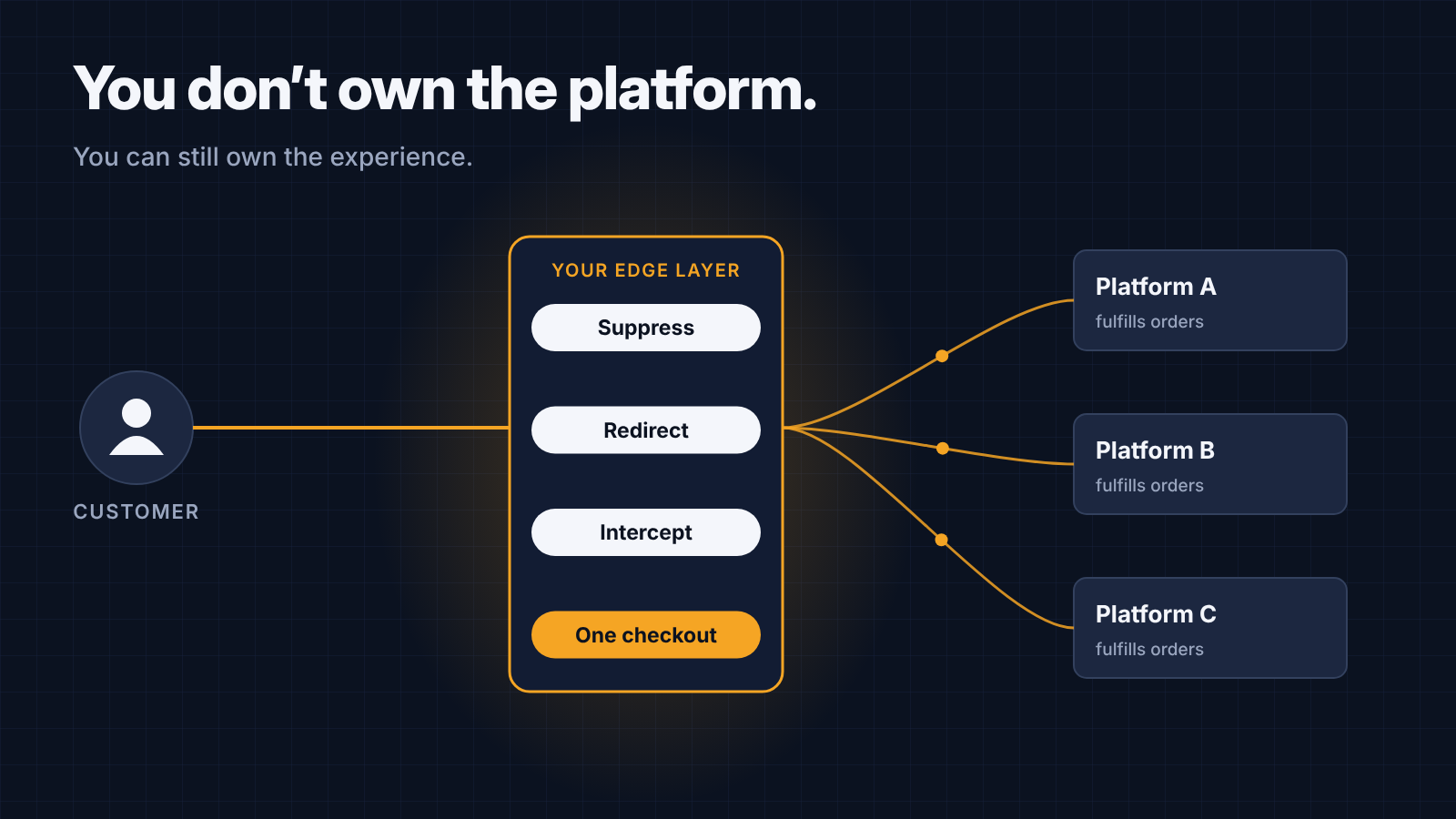
Many of the software platforms a business runs on come with a hidden line item: you rent the customer experience along with the software. Most of the time that's a fair trade. The vendor builds and maintains the engine, and you get to focus on the business.
The trade gets expensive when the platform does something you don't want in front of your customers, and you discover how little of the experience you actually control. It gets more expensive when you run on more than one platform, because each one brings its own look, its own rules and its own checkout. Customers see the seams.
Replace it, or put something in front of it
We hit exactly this on a recent build. The platforms underneath the business were the right choices. Replacing them would have meant a significant rebuild and real risk to operations that already worked. But the customer-facing side wasn't the business's to shape: no access to the page code, no control over where links went, and a separate checkout for each back end.
So instead of replacing anything, we put a layer in front of all of it. A Cloudflare Worker now sits on the business's own domain, and every customer interaction passes through it before reaching any vendor. That layer removes what customers shouldn't see, reroutes clicks to where the business wants them to go, and decides what reaches each platform at all.
Take back checkout
The most valuable piece was checkout. We pulled the cart and checkout out of the individual platforms and brought them up into the layer the business owns. There is now one cart and one checkout above every back end. The customer gets a single experience, and each order still goes to whichever platform fulfills it.
Owning the cart also lets the business offer options the individual platforms didn't support. The cart isn't limited to what one vendor allows anymore.
Why this matters at the portfolio level
When the front door and the checkout are yours, your vendors stop being landlords and start being suppliers. You can add one, swap one or combine several with far less disruption to what the customer sees, because the experience they see belongs to you.
That's leverage. It's the difference between a business that is shaped by its software and one that uses software to do what it already decided to do.
It isn't free. Owning checkout means owning payments, order records and every handoff to every back end, and those deserve real care. But for a business that has outgrown what its platforms allow, it can be a much smaller project than starting over.
Rent the engine if it's the right engine. Own the front door either way.
Jesse Myers wrote up the technical side of this build in more detail here.